

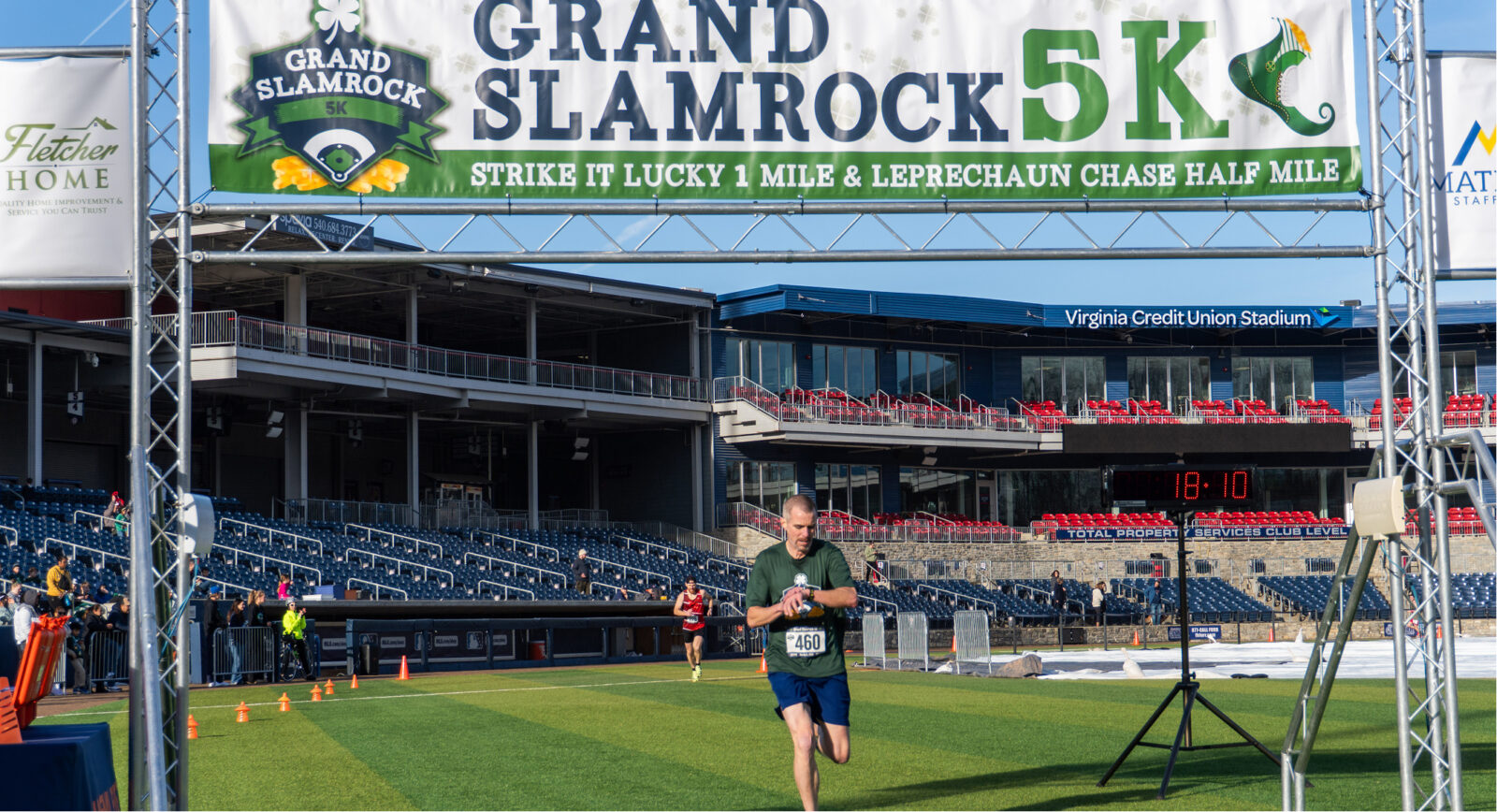
You cross the finish line of a 5K, stop your watch, and look down at your wrist.
3.22 miles.
You smile for a second. Maybe you accidentally earned a little extra credit. Maybe you worked harder than you thought.
Then you look at the official results.
3.10 miles.
Wait.
What happened?
Did the race course come up short? Did your watch add some imaginary distance? Did someone move the finish line while you weren’t looking?
The good news is that the answer is usually much less dramatic.
Your GPS watch probably didn’t lie to you.
And the race probably isn’t wrong.
The reason they disagree is because your watch and the race course are measuring two different things.
Before we talk about GPS watches, it is important to understand that not every race course is measured the same way. Some courses go through an official certification process, such as a USA Track & Field (USATF) certification. Those courses are carefully measured using specific procedures to ensure the advertised distance is accurate. A certified 5K course measures 5 kilometers. A certified half marathon course measures 13.1 miles.
Other races may not go through that certification process. That does not automatically mean the course is inaccurate, but it does mean there can be more variation. Some courses may be slightly long. Some may be slightly short.
For a professionally measured and properly laid out course, however, the distance is not a guess. It is not someone driving the route in a car and estimating where the finish line should go. The course is measured carefully, using the shortest possible running route, and verified to ensure runners are completing the correct distance.
So if you run a properly measured course, especially one put on by your favorite race timing and events company (we may know one…), the course distance is exactly what it is supposed to be.
So why does your watch disagree?
The simplest explanation is that your watch measures the path you actually ran.
The course measurement follows the ideal route.
Those are often two very different things.
Think about running on a track. A standard track is measured at 400 meters in lane one. If you decided to run every lap in lane eight, your watch would not show exactly 400 meters because you traveled farther. The track didn’t change. The measurement didn’t change. You simply ran a longer path.
The same thing happens on a road race course.
The course measurement follows the shortest possible line around turns. Runners, however, are not robots programmed to hit perfect tangents.
We run around other runners.
We take corners wider than necessary.
We avoid puddles.
We move toward friends.
We follow the crowd.
Every little adjustment adds distance. A few extra feet at one turn might not seem like much, but multiply that by dozens of turns throughout a race and suddenly your watch is showing a little more distance than the course was designed to measure.
Then there is the GPS itself.
Your watch is an amazing piece of technology. It tracks your pace, distance, heart rate, and a ridiculous amount of information about your workout. Some watches probably know more about your running habits than your family does.
But your GPS watch does have one limitation.
It has never actually seen the course.
It is estimating your location using satellite signals and then connecting those points together to calculate distance. Most of the time, it does an excellent job. But certain environments can make that job harder.
Sharp turns can confuse GPS tracking. Tall buildings can interfere with signals. Trees and wooded sections can make it more difficult for your watch to accurately determine your position. A winding neighborhood course can be much harder to track than a straight road.
Sometimes your watch thinks you ran a slightly wider turn than you actually did.
Sometimes it cuts a corner.
Sometimes it just has a bad day.
Even technology needs a little forgiveness.
There are also a few simple things runners do that can add distance to their watch without realizing it. Your watch starts measuring when you press the button, not when the official race starts. If you start recording before crossing the starting line or forget to stop it immediately after finishing, those extra seconds of movement become extra distance.
None of this means GPS watches are unreliable.
They are incredible training tools. They help runners pace themselves, track improvement, prepare for races, and understand their workouts better than ever before.
But when it comes to official race distance, the course measurement is the standard.
So the next time your watch says you ran 3.25 miles in a 5K, don’t immediately assume something went wrong.
You probably didn’t run the wrong distance.
The race timer probably didn’t accidentally put the finish line in the wrong place.
More than likely, you simply experienced the difference between the perfect line and the real-world line.
The course measures the shortest possible route.
Your watch measures your adventure.
And honestly?
That extra little bit of distance probably came with a few good stories along the way.